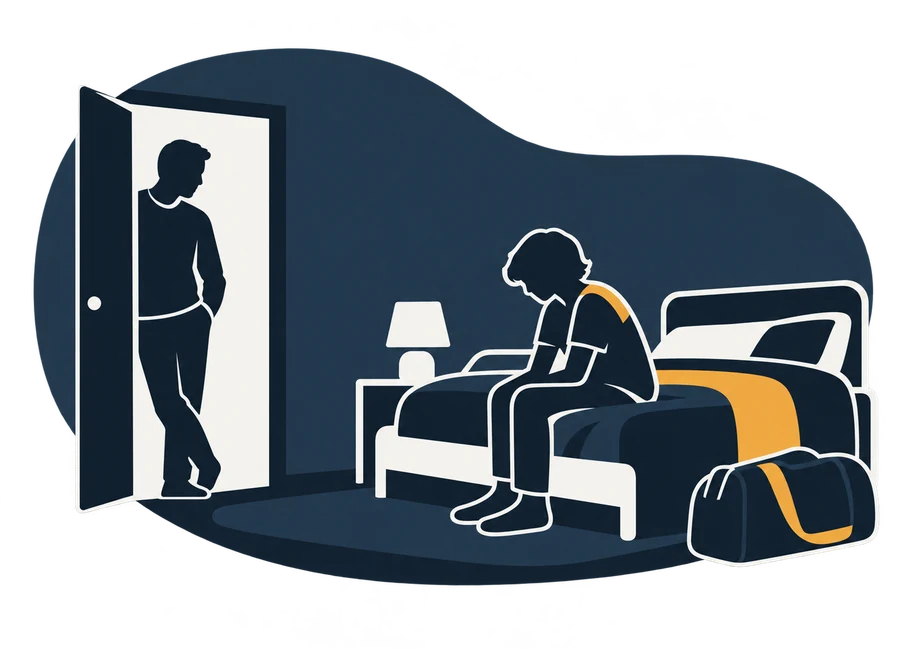
Your kid says they want to quit. What do you say?
Your son says he doesn’t want to play anymore. Maybe after a bad game, maybe out of nowhere on a Tuesday. For a lot of parents, it’s the hardest thing to hear. You’ve put years into this together, and there may be money, a team, and your own weekends wrapped up in it.
“I don’t want to play anymore” is usually the start of a conversation, not the end of one. Ask what it stands for before you answer it.
Your first reaction
What you’ll want to say
The words that come first on a night like this, why they come so easily, and why they tend to miss.
Both come from love, and from knowing what he’d be walking away from. Both also argue with “I don’t want to play anymore” before you know what he means by it.
Your own historyDid you ever quit something? Did someone make you stay, or let you go? How do you feel about it now?
The idea
What’s really going on
The one idea that explains tonight, in plain words.
Why he plays matters more than whether he plays this week
Think of something you kept doing only because someone expected it, and something you chose. Which one got your best effort?
Kids tend to stay motivated, and enjoy their sport, when three things are true:
When one goes missing, motivation tends to drop, and a kid low on motivation may start to pull away from the sport. “I don’t want to play anymore” can be one way that shows up. Feeling pushed by parents to keep playing is one way he can stop feeling it’s his choice.
Based on: self-determination theory
The ride home
When he says it
What to do, in the order it comes up.
If it hits you hard, it’s okay to say, “I want to hear about this. Can we talk tomorrow?” and mean it.
When he’s ready:
What you might hear
Being worn out all the time is part of burnout, which is different from a bad week (more on that below). Ask about how much he’s doing, not just how he’s playing.
Ask when it stopped being fun. His answer may point to which one is missing: feeling capable, feeling it’s his choice, or feeling connected.
That’s about feeling capable. Ask about one recent game rather than arguing with it.
Then keep it going. Say back what you heard, in their words, or ask about one thing they mentioned, in a way that leaves the answer to them: “Tell me about practice lately.” The urge to fix it, or to talk them out of how they feel, is your cue to do one of these instead.
His to decide: whether he wants to keep playing.
Yours to decide, as his parents: the timing, like whether he finishes this season. Hear his reasons first.
Practice
Try it
A rep before the real thing. Pick what you’d most likely say, and you’ll see how it tends to land with your kid, from shutting them down to opening them up.
Tuesday night. Your son is fifteen. You’re doing the dishes together when he says, without looking up, “I think I’m done with lacrosse.” What do you say?
How this tends to land with your kid
Practice
Then what?
This is where most parents slip back into old habits. Pick what you’d say next.
You ask, “What makes you not want to play?” He says, “It’s just not fun anymore. Practice is the same thing every day.” What do you say next?
How this tends to land with your kid
If it’s bigger
When it’s more than a bad stretch
Burnout is different from a bad week. It shows up as being worn out, feeling like he’s accomplishing less, and caring less about lacrosse. If those last for weeks, talk to someone who works with young athletes.
“I don’t want to play anymore” is usually the start of a conversation, not the end of one. Ask what it stands for before you answer it.
Practice this one with your own kid
Practice every ride home. The full version, $149 once:
- Unlimited practice rides, any night, with your own kid’s details
- More than a dozen common nights for your kid’s sport, or describe your own
- Full notes on every line you try, not just the highlights
- Three short lessons: what to notice at the game, how to ask in the car, and how to leave what’s next to them
- Help that steps back as you get better, so you need it less
- A free second seat for whoever else drives your kid home
“I was genuinely so impressed (and shocked!) at how it adapted the examples and language based on the specific sport I selected.”
Not helping after 30 days? Full refund, no questions asked.
See the full version